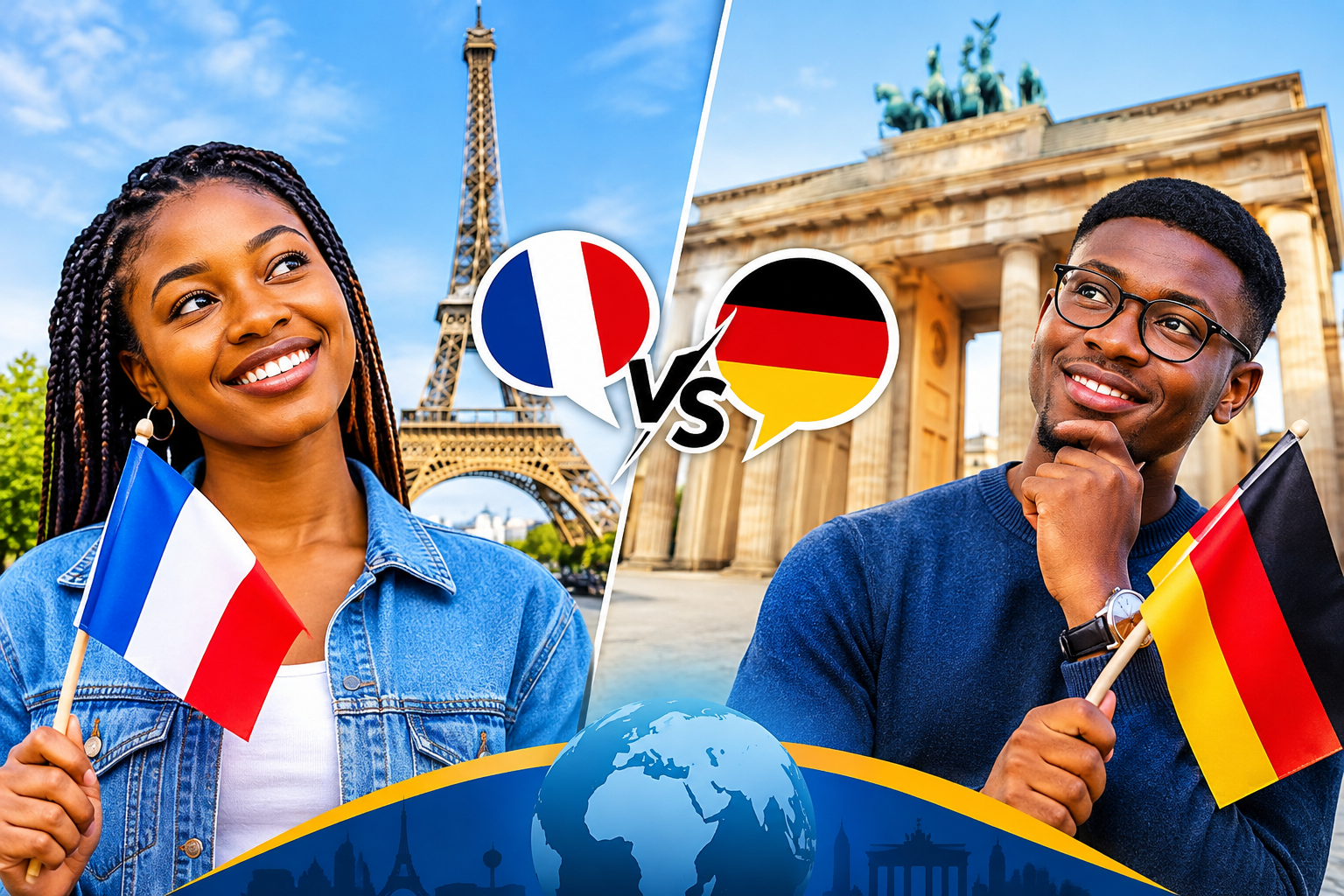
French vs German: Which Language Should You Learn in Nigeria for Study, Work and Travel?
Are you thinking about learning a foreign language but cannot decide between French and German? You are not alone. Many Nigerians want to learn a second language to improve their career prospects, prepare for international education, travel confidently or communicate with people from different cultures.
Both French and German can be valuable skills. However, the right choice depends on your goals, the countries you are interested in, your career plans and the language requirements of your intended destination.
If you are searching for French classes in Lagos, German language courses in Nigeria or online foreign language lessons, this guide will help you decide where to begin.
1. Why Should You Learn a Foreign Language in Nigeria?
Learning a foreign language can help you communicate across borders, understand different cultures and prepare for opportunities that require multilingual skills.
For students, language learning can support preparation for international education. For professionals, it can improve communication with international clients, employers and colleagues. Entrepreneurs can also benefit when dealing with customers and business partners in other countries.
However, learning a language is not a guarantee of admission, employment, a visa or relocation. It is a skill that can strengthen your preparation when combined with the qualifications and requirements relevant to your goals.
2. French vs German: What Is the Difference?
French and German are both useful international languages, but they serve different linguistic communities and may be relevant to different personal or professional goals.
Learning French
French is spoken in France and several countries across Africa, Europe and other regions. It can be useful for people interested in international business, diplomacy, tourism, education and communication across French-speaking communities.
For Nigerians, learning French may also support communication with people in neighbouring French-speaking countries and prepare learners for French-language examinations when required.
You might consider French if you want to:
-
Communicate more confidently when travelling to French-speaking countries.
-
Develop language skills for international business and customer relations.
-
Prepare for French proficiency examinations such as DELF or DALF, depending on your goals.
-
Improve your ability to communicate with French-speaking communities.
-
Explore educational or professional opportunities where French proficiency is relevant.
Learning German
German is the principal language of Germany and is also spoken in Austria, parts of Switzerland and other communities. It can be relevant to learners interested in German-speaking environments, including higher education, technical fields, healthcare and international business.
You might consider German if you want to:
-
Prepare for a German-language academic programme.
-
Develop communication skills for German-speaking workplaces.
-
Explore German language proficiency examinations such as Goethe or ECL, where appropriate.
-
Understand German culture and everyday communication.
-
Build language skills for travel or professional development.
Remember that universities, employers and authorities may require a specific language level or certificate. Always confirm the requirements that apply to your intended purpose.
3. Which Language Is Easier to Learn: French or German?
There is no universal answer. The difficulty of learning French or German depends on your previous language experience, learning habits, available study time and exposure to the language.
French learners may need to practise pronunciation, listening comprehension, grammatical gender and verb conjugation. German learners may need to focus on grammatical cases, word order, noun genders and compound words.
Both languages become more manageable when you study consistently and practise speaking, listening, reading and writing.
Here are five ways to improve your progress:
-
Set a clear learning goal.
-
Practise vocabulary and pronunciation every day.
-
Listen to recordings and conversations in your target language.
-
Speak regularly instead of relying only on grammar exercises.
-
Follow a structured course with feedback from a qualified instructor.
The best language to learn first is the one that aligns with your current priorities and that you can commit to studying consistently.
4. How Long Does It Take to Learn French or German?
The time required depends on your target proficiency level, previous experience, lesson frequency and independent practice.
A beginner studying at A1 level will have different learning needs from someone preparing for B1 or B2 proficiency. Reaching an advanced level generally requires more study and practical exposure.
Instead of choosing a course based only on how quickly it promises results, ask these questions:
-
How many hours of lessons are included?
-
How often will you practise speaking?
-
Are reading, writing, listening and speaking covered?
-
Will your progress be assessed?
-
Does the course prepare you for a recognised examination if you need one?
A structured learning plan can help you track progress and identify areas that require more attention.
5. Do You Need a Language Certificate to Study or Work Abroad?
Not every international opportunity requires a language certificate. However, some universities, employers, professional bodies and government authorities specify particular language qualifications or proficiency levels.
For French, relevant examinations may include DELF, DALF, TEF or TCF, depending on the intended application.
For German, candidates may encounter examinations such as Goethe-Zertifikat and ECL, among other qualifications accepted for particular purposes.
These examinations are not interchangeable in every situation. The certificate you need depends on the institution or authority receiving your application.
Before registering for an examination, confirm:
-
The required language level.
-
Which examination certificates are accepted.
-
Whether a particular examination date or certificate format is required.
-
The validity rules, if applicable.
-
Whether additional academic, professional or immigration requirements apply.
Choosing the correct examination before you begin preparing can help you avoid unnecessary expenses and delays.
6. Where Can You Learn French or German in Lagos, Nigeria?
Choosing a suitable language school is an important step towards building confidence and maintaining consistent progress.
The Multi-Language Place provides language learning opportunities for people interested in French, German and other foreign languages. Its services include language courses, online learning options, examination-related services and cultural immersion activities.
When comparing French or German classes in Lagos, consider the following:
Structured lessons: Look for a programme that follows a clear progression from beginner to more advanced levels.
Practical communication: Your classes should help you develop speaking and listening skills alongside reading and writing.
Flexible learning: Online or in-person classes can help you choose a learning arrangement that suits your schedule.
Examination preparation: If you need a certificate, ask whether the course supports preparation for your intended examination.
Progress monitoring: Regular feedback can help you identify weaknesses and improve steadily.
Explore language courses at The Multi-Language Place:
https://languageplace.net/languages/
For information about foreign language classes in Lagos, visit:
https://languageplace.net/foreign-language-classes-lagos/
7. Can You Learn French or German Online in Nigeria?
Yes. Online language classes can help learners study from home or another convenient location without travelling to a physical classroom for every lesson.
Online learning may suit students, working professionals, business owners and people living outside Lagos.
To get the most from online French or German classes, choose a course that includes interactive lessons, opportunities to speak, listening practice, assignments and feedback.
It is also useful to create a weekly study routine. Even short, consistent practice sessions can help you retain vocabulary and become more comfortable using the language.
Explore learning options through The Multi-Language Place website:
https://languageplace.net/
8. What Other Language Services Can You Access?
Language learning is only one part of effective international communication. Depending on your needs, you may also require professional language services.
The Multi-Language Place offers services including:
Translation: Translating written material between supported languages for appropriate personal or professional purposes.
Interpretation: Supporting spoken communication in settings such as meetings, conferences and other engagements.
Proofreading and editing: Improving the clarity, grammar and presentation of written documents.
Language immersion and excursions: Providing opportunities to experience language and culture in more practical contexts.
These services can be useful to individuals, educational institutions and organisations that need language support for communication and cross-cultural engagement.
To explore the available services, visit:
https://languageplace.net/services/
9. French or German: Which One Should You Choose?
Use your goals to guide your decision.
Choose French if your priorities include communicating with French-speaking communities, developing language skills for Francophone markets or preparing for a French-language qualification.
Choose German if you are particularly interested in German-speaking countries, German-language academic programmes or professional opportunities where German proficiency is relevant.
If you are still unsure, research the language requirements associated with your intended destination, institution or career before enrolling.
You can also begin with one language and consider another later when your schedule and goals allow.
Frequently Asked Questions
Is French or German better for Nigerians?
Neither is universally better. French may be more immediately relevant for some people interested in Francophone West Africa, while German may be more relevant for those with specific goals connected to German-speaking countries. Your needs should determine your choice.
Can I learn French or German as a complete beginner?
Yes. Beginner courses introduce essential vocabulary, pronunciation, grammar and everyday expressions. You do not need previous experience to start.
Can I study French or German online?
Online classes can provide structured lessons and interactive practice. Check the course format, schedule and opportunities for speaking practice before enrolling.
Do I need German to move to Germany?
Language requirements depend on the type of application, programme, employment or immigration pathway. Some routes require proof of German proficiency, while others may have different rules. Check the official requirements for your specific situation.
Does learning French guarantee a job abroad?
No. Language skills can be useful, but employment depends on factors such as qualifications, experience, work authorisation and the requirements of the employer.
Start Your Language Learning Journey with The Multi-Language Place
Learning French or German can be a practical investment in your communication skills, cultural understanding and professional development.
The important thing is to start with a clear goal, choose an appropriate course and practise consistently. If you need a language examination, identify the certificate accepted for your intended purpose before registering.
The Multi-Language Place offers language learning and professional language services to help individuals and organisations develop their communication skills.
Explore the available courses and services today:
Website: https://languageplace.net/
Email: [email protected]
Take the first step towards becoming a more confident language learner.