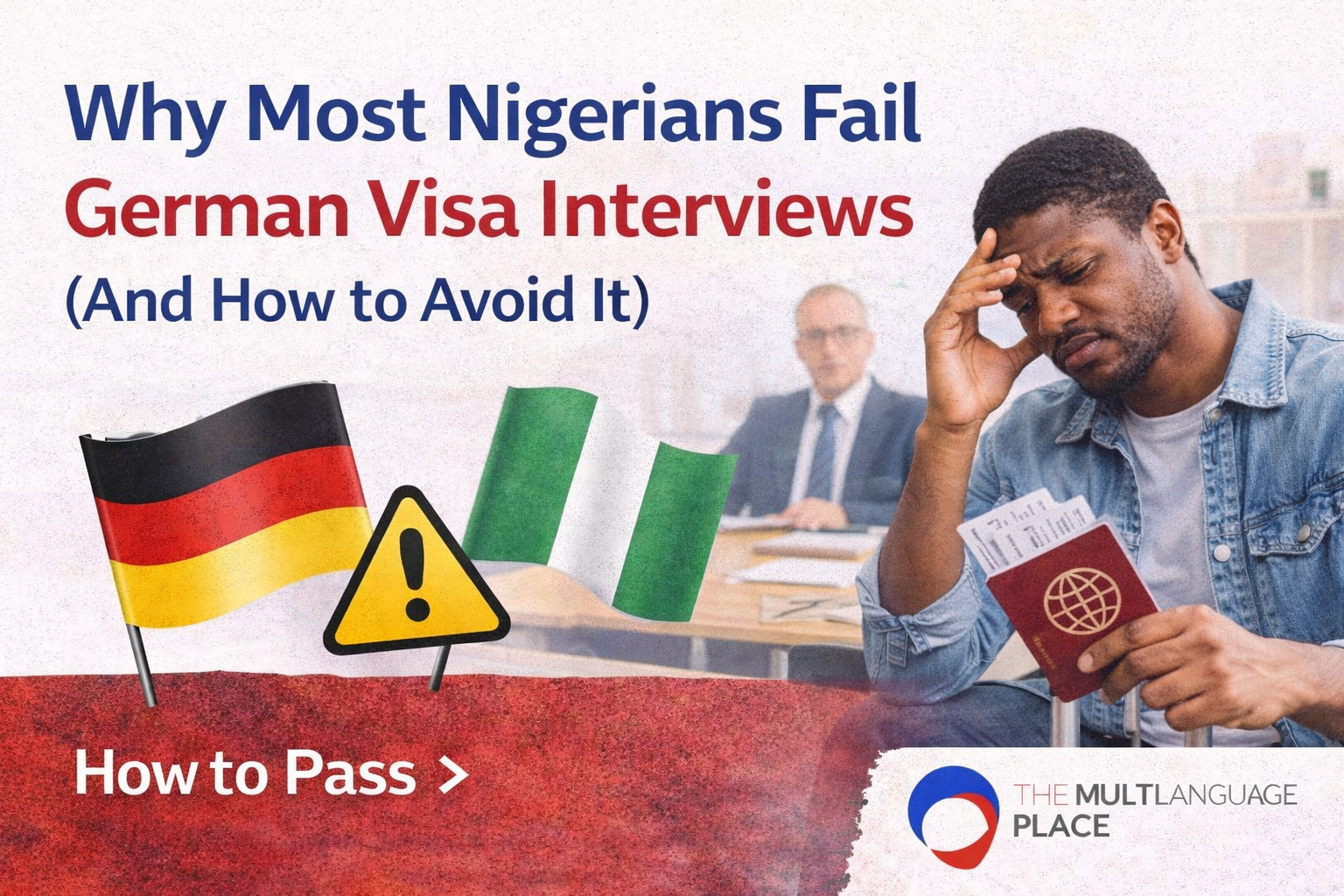
Moving to Germany for employment, education, or Ausbildung (vocational training) can be a transformative experience for many Nigerians. Germany has a stable economy, excellent professional opportunities, and top-notch education. But before you can do that, you have to pass the German visa interview, which is a crucial step.
Regretfully, a large number of candidates do not pass their visa interviews every year. Most of the time, inadequate preparation, communication difficulties, and misconceptions about the procedure are the issues rather than IQ or credentials.
The most frequent reasons Nigerians fail German visa interviews are discussed in this article, along with strategies for avoiding them.
1. Poor German Language Skills
Inadequate proficiency in German is one of the main causes of applicants’ difficulties during visa interviews.
In many German programs, particularly Ausbildung, candidates must speak at least B1 and occasionally B2 German. However, a lot of applicants try the process with only rudimentary A1 knowledge.
Visa officers may ask straightforward questions in German during the interview, like:
-
Why do you want to study in Germany?
-
What program will you study?
-
What are your future plans?
Candidates who lack confidence in their responses frequently give the impression that they are unprepared to live or work in Germany.
How to Avoid This
Before your interview:
-
Aim for at least B1 or B2 German proficiency.
-
Practice speaking, not just reading or writing.
-
Prepare answers to common interview questions in German.
Real communication skills, which are essential for immigration interviews, are taught to students at The Multi-Language Place.
2. Memorized Answers Instead of Genuine Responses
Memorizing prepared responses is another typical error made by applicants.
Some people go to visa preparation courses where they are asked to repeat exact answers. Although preparation is beneficial, replies that are committed to memory frequently seem artificial or unnatural.
Visa inspectors are taught to spot instances in which applicants are merely repeating answers from memory rather than genuinely comprehending their intentions.
Applicants frequently become anxious when offered follow-up questions since they are unable to modify their memorized answers.
How to Avoid This
Instead of memorizing answers:
-
Understand your program and career plans clearly.
-
Practice explaining your goals in your own words.
-
Be honest and confident when answering questions.
Authenticity is always better than perfection.
3. Lack of Clear Study or Career Plans
Visa officers want to know that your move to Germany has a clear purpose.
Applicants sometimes fail because they cannot explain:
When answers sound vague, inconsistent, or unrealistic, it raises concerns about the applicant’s intentions and seriousness.
How to Avoid This
Before your interview, make sure you understand:
For example, if you are applying for an Ausbildung in nursing, you should be able to explain:
Clear goals show commitment and preparation.
4. Weak Knowledge of Germany
Some applicants know little about the country they plan to move to.
During the interview, visa officers may ask questions like:
-
Why did you choose Germany instead of another country?
-
What do you know about the city where you will study?
-
What are the advantages of your chosen program?
Applicants who cannot answer these questions may appear unprepared or unserious.
How to Avoid This
Do some basic research before your interview:
-
Learn about Germany’s education system
-
Understand the city where you will live
-
Know details about your school or training program
Showing knowledge about Germany demonstrates serious interest and readiness.
5. Lack of Confidence During the Interview
Confidence plays a huge role in visa interviews.
Some applicants become extremely nervous and:
Inadequate communication can have an impact on the interview’s outcome even if their paperwork is accurate.
The ability of candidates to adjust to life in Germany, where independence and communication are crucial, is what visa authorities look for.
How to Avoid This
You can improve your confidence by:
-
Practicing mock visa interviews
-
Speaking German regularly
-
Preparing answers to common questions
Confidence comes from preparation and practice.
Why Language Training Makes a Difference
Language and preparation are major obstacles in many visa interviews.
Those who devote time to honing their communication abilities in German are more likely to:
Language training also prepares students for daily life, work environments, and integration in Germany.
Start Your Preparation Early
Relocating to Germany is a great opportunity, but success requires proper preparation.
If you are planning to apply for:
it is important to build strong German language skills and interview confidence.
At The Multi-Language Place, we help students develop practical German communication skills from A1 to B2 levels, preparing them for real opportunities abroad.
Final Thoughts
Failing a German visa interview is not always about lack of qualifications. In many cases, it is about language skills, preparation, and confidence.
By avoiding common mistakes such as weak German proficiency, memorized answers, and unclear career plans, you can significantly improve your chances of success.
Your journey to Germany starts with the right preparation and the right language training.
The Multi-Language Place
Learn German and French with experienced instructors in a supportive learning environment.
Start your journey today and prepare yourself for opportunities around the world.