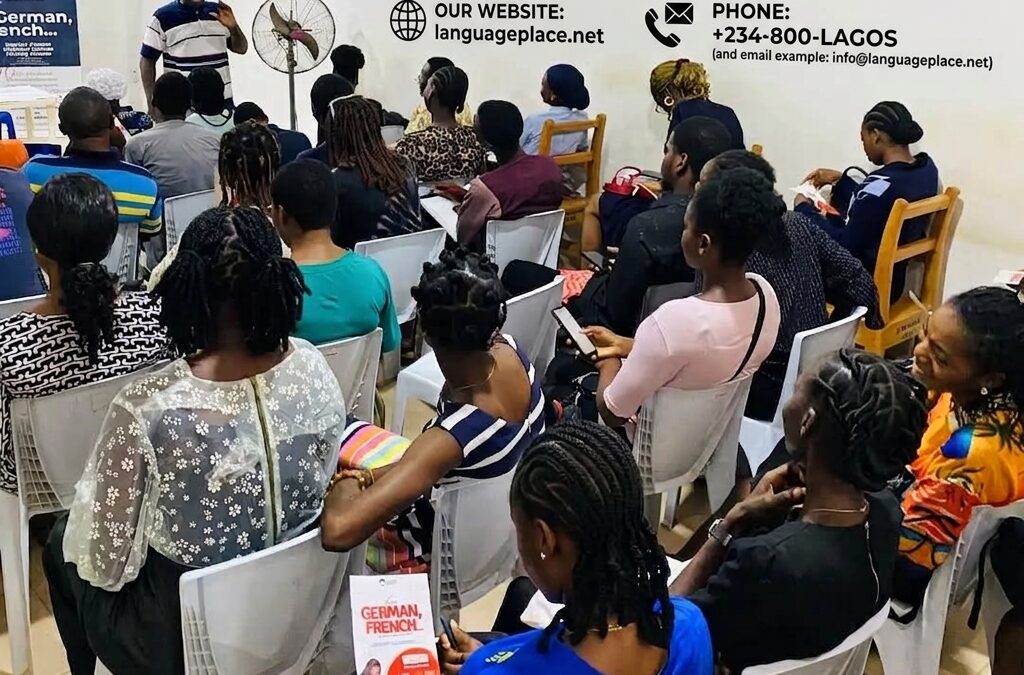
Want to Learn a New Language? Start Here
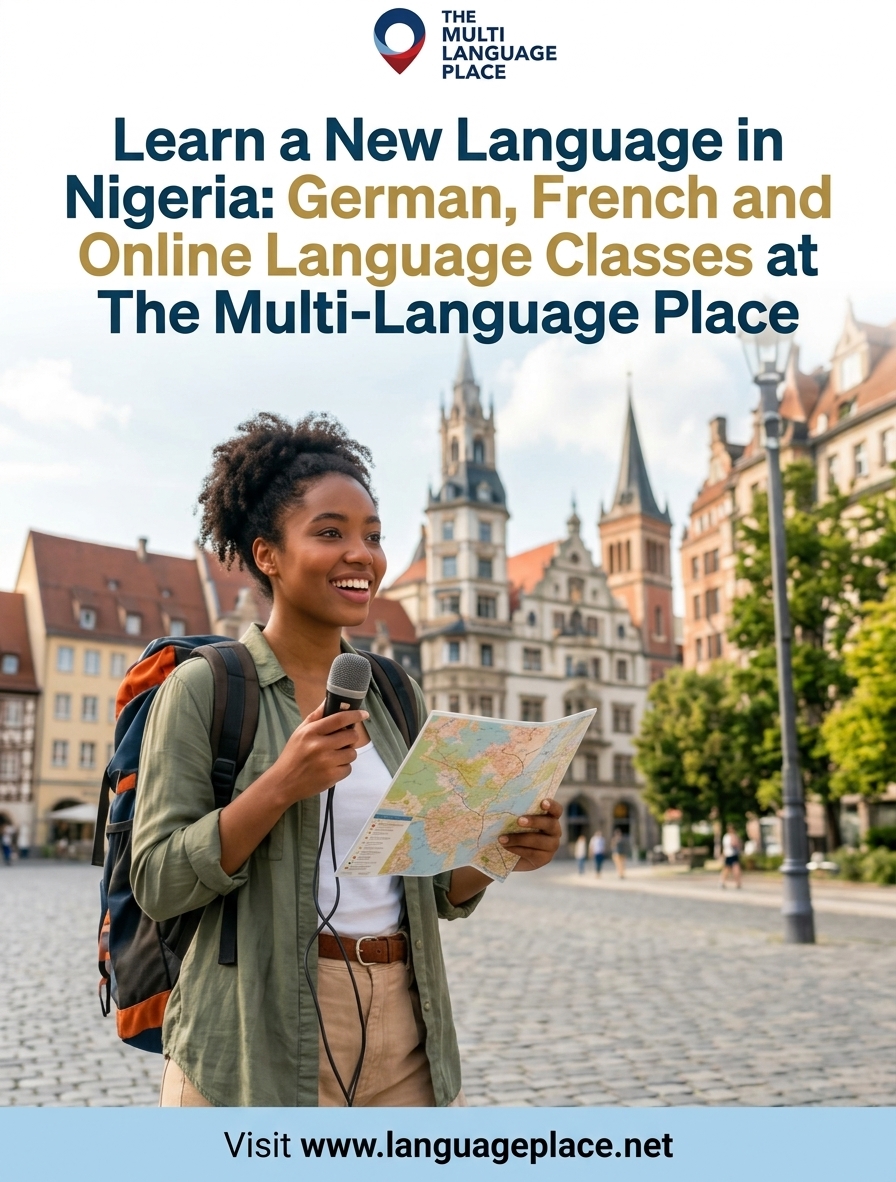
Have you been searching for German language classes in Nigeria, affordable French lessons, or online language courses that fit your schedule?
You are not alone. People learn new languages for many reasons, including studying abroad, pursuing international career opportunities, travelling, relocating, expanding their businesses, and communicating with people from different cultures.
However, finding the right language school, choosing a suitable course, and understanding which language certification exam to take can be challenging.
At The Multi-Language Place, we make language learning more accessible through language classes, online learning opportunities, cultural immersion, and professional language services.
Whether you are a complete beginner or looking to improve your existing language skills, you can take the first step towards becoming a confident language learner.
Explore our website at The Multi-Language Place to learn more about our services.
1. Why Are More People Learning Foreign Languages?
Learning a foreign language can open doors to opportunities in education, employment, business, travel, and cultural exchange.
For Nigerians planning to study or work abroad, learning the language spoken in their destination country can be an important part of their preparation.
Here are some reasons to consider learning a new language.
Study abroad opportunities
Some international universities and educational programs require applicants to demonstrate proficiency in the language of instruction. Learning German or French can help you prepare for academic opportunities in countries where these languages are widely used.
Career development
Language skills can be useful in international business, tourism, hospitality, customer service, diplomacy, translation, interpretation, and other professional fields.
Travel and relocation
Knowing the local language can make everyday activities easier, from introducing yourself and asking for directions to communicating at work or interacting with local communities.
Personal development
Learning another language can help you connect with different cultures, develop communication skills, and build confidence in unfamiliar environments.
Your reason for learning a language will help determine which course and learning method are most suitable for you.
2. Learn German in Nigeria: Where Should Beginners Start?
German is an important language for people interested in education, employment, travel, and relocation opportunities in German-speaking countries.
If you are searching for German classes in Nigeria, starting at the A1 level is a practical option if you have little or no previous knowledge of German.
The Common European Framework of Reference for Languages (CEFR) describes proficiency levels from A1, the beginner level, to C2, the most advanced level.
At A1, learners begin developing the ability to:
-
Introduce themselves and other people in German.
-
Ask and answer simple questions about personal information.
-
Understand familiar words and basic everyday expressions.
-
Practise pronunciation and essential vocabulary.
-
Participate in simple conversations when the other person speaks clearly.
As learners progress to A2, B1, and higher levels, they develop more independent communication skills.
The appropriate level depends on your existing ability and your long-term goals.
If you intend to take a German language certification examination, your preparation should also reflect the requirements of the specific exam.
Learn more about German language examinations through the official Goethe-Institut German exams website.
At The Multi-Language Place, you can explore German language learning options designed to help you develop practical communication skills.
Ready to start learning German? Visit The Multi-Language Place to enquire about available classes.
3. Learn French in Nigeria for Education, Work and Everyday Communication
French is spoken across Europe, Africa, and other parts of the world. For Nigerians, learning French can be useful for communicating across borders, pursuing educational opportunities, working with international organisations, and developing business relationships.
If you are a beginner, an A1 French course can introduce you to the foundations of the language.
You can begin by learning how to:
-
Greet people and introduce yourself in French.
-
Ask and answer basic questions.
-
Understand numbers, dates, and everyday expressions.
-
Develop your listening and pronunciation skills.
-
Form simple sentences for common situations.
As you progress, you can work towards more advanced communication and prepare for a recognised French proficiency examination if required.
French language learners may consider examinations such as DELF and DALF, depending on their proficiency level and objectives.
The DELF examinations cover levels A1 to B2, while DALF covers C1 and C2. These diplomas are issued through France Éducation international and are recognised qualifications for demonstrating French proficiency. The right examination depends on the requirements of the institution or organisation you are applying to.
Find official information about the examinations at France Éducation international.
If French is part of your academic, professional, or personal development plans, structured lessons and regular speaking practice can help you work towards your goals.
4. Can You Learn a Language Online Without Attending a Physical School?
Yes. Online language classes allow learners to study from different locations without having to travel to a physical language centre.
This can be especially useful if you live outside the immediate area served by a language school, have a busy schedule, or prefer learning from home.
With online language learning, you can work towards improving your:
-
Speaking and listening skills.
-
Vocabulary and pronunciation.
-
Reading and writing abilities.
-
Everyday communication.
-
Preparation for selected language proficiency examinations.
However, successful online learning requires consistency, participation, and opportunities to practise speaking.
Choose a course that gives you a clear learning structure and opportunities to use the language rather than relying entirely on memorising vocabulary.
At The Multi-Language Place, online language learning provides an opportunity for learners to explore available courses beyond the physical classroom.
Whether you want to learn German or French, contact the school to ask about current online class schedules, fees, class formats, and registration requirements.
Explore your options: Visit The Multi-Language Place.
5. Which Language Certification Exam Should You Take?
Learning a language and obtaining an official language certificate are two different things.
Language classes help you develop your skills. A certification examination evaluates your proficiency against the requirements of a particular examination system.
The correct examination depends on the language you are learning, your current proficiency, and what you need the certificate for.
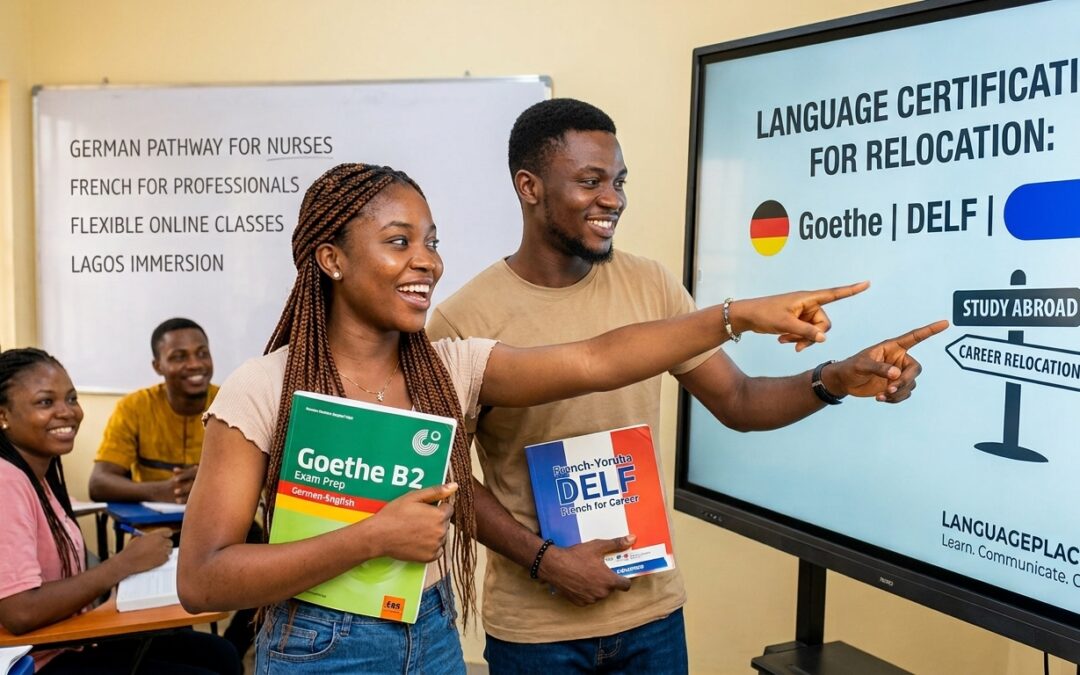
German: Goethe-Zertifikat
The Goethe-Institut offers German examinations at levels A1, A2, B1, B2, C1, and C2.
These examinations assess language proficiency and can be relevant to educational, professional, and other international applications. However, acceptance requirements differ by institution, employer, and visa category.
For example:
-
A1: Demonstrates basic German language skills.
-
A2: Demonstrates elementary communication abilities.
-
B1: Demonstrates the ability to manage many familiar everyday situations.
-
B2: Demonstrates a more independent level of communication.
-
C1 and C2: Represent advanced and highly proficient language use.
The Goethe-Zertifikat A1 is often relevant to learners who need to demonstrate basic German proficiency, but not every application requires the same level.
Check the official Goethe-Institut examination information and confirm the specific requirements that apply to your circumstances.
French: DELF and DALF
DELF and DALF are official French language diplomas administered through France Éducation international.
The available levels are:
-
DELF A1
-
DELF A2
-
DELF B1
-
DELF B2
-
DALF C1
-
DALF C2
These diplomas assess French proficiency at different stages, from beginner to advanced.
They may be useful for academic applications, professional development, and other situations where proof of French proficiency is required.
For certain French-language university or immigration-related procedures, a different test, such as the Test de connaissance du français (TCF), may be required instead.
Always check the exact examination accepted by the institution or authority concerned.
Official information is available from France Éducation international.
Spanish: DELE
If you are learning Spanish, the Diploma de Español como Lengua Extranjera (DELE) is an internationally recognised Spanish proficiency diploma awarded by the Instituto Cervantes on behalf of Spain’s Ministry of Education.
Adult examinations are available at levels A1 to C2.
You can find official examination information through the Instituto Cervantes DELE website.
What about ECL examinations?
The European Consortium for the Certificate of Attainment in Modern Languages (ECL) offers language examinations in selected languages and proficiency levels.
If you are considering an ECL examination, check the official examination catalogue to confirm whether your target language and level are available and whether the certificate meets your intended institution’s requirements.
Does The Multi-Language Place issue these certificates?
Before registering for an examination, distinguish between language instruction, examination preparation, and official examination administration.
The Multi-Language Place provides language learning services and can advise you about suitable learning pathways. Contact the school to confirm which examination preparation services are currently available.
Do not assume that completing a language course automatically awards a Goethe-Zertifikat, DELF, DALF, DELE, or ECL certificate. Official certificates are awarded under the relevant examination body’s rules.
6. Other Language Courses and Services at The Multi-Language Place
Language learning is only one part of effective communication across cultures. The Multi-Language Place also offers additional language-related services.
Other language learning opportunities
Depending on current course availability, learners can enquire about languages such as Spanish, Arabic, Portuguese, and Yoruba.
The right choice depends on your goals, preferred learning format, and the courses currently offered.
Translation services
Translation helps individuals and organisations communicate written information across languages.
It can be useful for documents, business communication, and other materials requiring language conversion. Always confirm the language pairs and document types accepted before placing an order.
Interpretation services
Interpretation supports spoken communication between people who use different languages. It may be needed for conferences, meetings, diplomatic engagements, religious programmes, negotiations, and other events.
The required service will depend on the languages involved, the event format, and the level of specialist knowledge needed.
Proofreading and editing
Proofreading and editing help improve the clarity, accuracy, grammar, and presentation of written content.
For multilingual documents, it is important to confirm that the service provider can work confidently in the relevant language.
Language excursions and cultural immersion
Classroom lessons build a foundation, but using a language in practical situations can help learners connect vocabulary with real-life communication.
Cultural immersion and guided language activities can provide additional opportunities to engage with a language and understand its cultural context.
To learn more about available services, visit The Multi-Language Place website.
7. How to Choose the Right Language Course
Before registering for a language course, consider these five factors.
1. Define your goal. Are you learning for study, work, travel, relocation, business, or personal development?
2. Assess your current level. Complete a placement assessment if one is available. Beginners can usually start at A1, while returning learners may benefit from a level check.
3. Choose a suitable learning format. Consider online or in-person lessons based on your location, schedule, and preferred learning environment.
4. Check certification requirements early. If you need a certificate, find out which examination and level your target institution or authority accepts before choosing your preparation plan.
5. Make time for regular practice. Attend lessons, review vocabulary, practise listening, and speak the language whenever possible.
Consistency is important. Progress depends on your starting level, time spent practising, learning environment, and the skills you are trying to develop.
Frequently Asked Questions About Language Classes
Can I learn German from scratch in Nigeria?
Yes. You can start with an A1 German course and gradually develop your vocabulary, pronunciation, grammar, listening, and speaking skills.
Can I learn French online from Nigeria?
Yes. Online French classes can provide access to language lessons without requiring you to attend a physical centre. Confirm the current schedule, class format, and registration requirements with your chosen school.
Which German exam is required for studying or relocating to Germany?
There is no single examination or proficiency level required for every situation. Requirements depend on the university, employer, professional body, visa category, or other relevant authority. Check the official requirements before booking an exam.
Is A1 enough for a language certificate?
A1 is a recognised beginner proficiency level in several examination systems. Whether it is sufficient depends on the purpose for which you need the certificate.
Can I prepare for a language examination while taking classes?
Yes. You can build general language proficiency while following a structured examination preparation plan. Ask your school whether it offers preparation for your specific examination, including practice tests and speaking exercises.
Does The Multi-Language Place offer online classes?
The school advertises online language learning options. Contact the team to confirm the languages, schedules, fees, and class availability for your preferred course.
Start Your Language Learning Journey Today
You do not have to wait until you travel abroad or find a school in your immediate neighbourhood to begin learning a new language.
Whether you want to learn German for an international opportunity, improve your French communication skills, explore another language, prepare for a proficiency examination, or access professional translation and interpretation services, choosing the right learning pathway is an important first step.
At The Multi-Language Place, you can enquire about language courses and services that align with your goals.
Ready to get started?
Visit www.languageplace.net to explore the school’s services.
You can also contact the team on WhatsApp at +234 814 626 9811 to enquire about current classes, online learning options, fees, and registration.
Your next opportunity could begin with a new language.