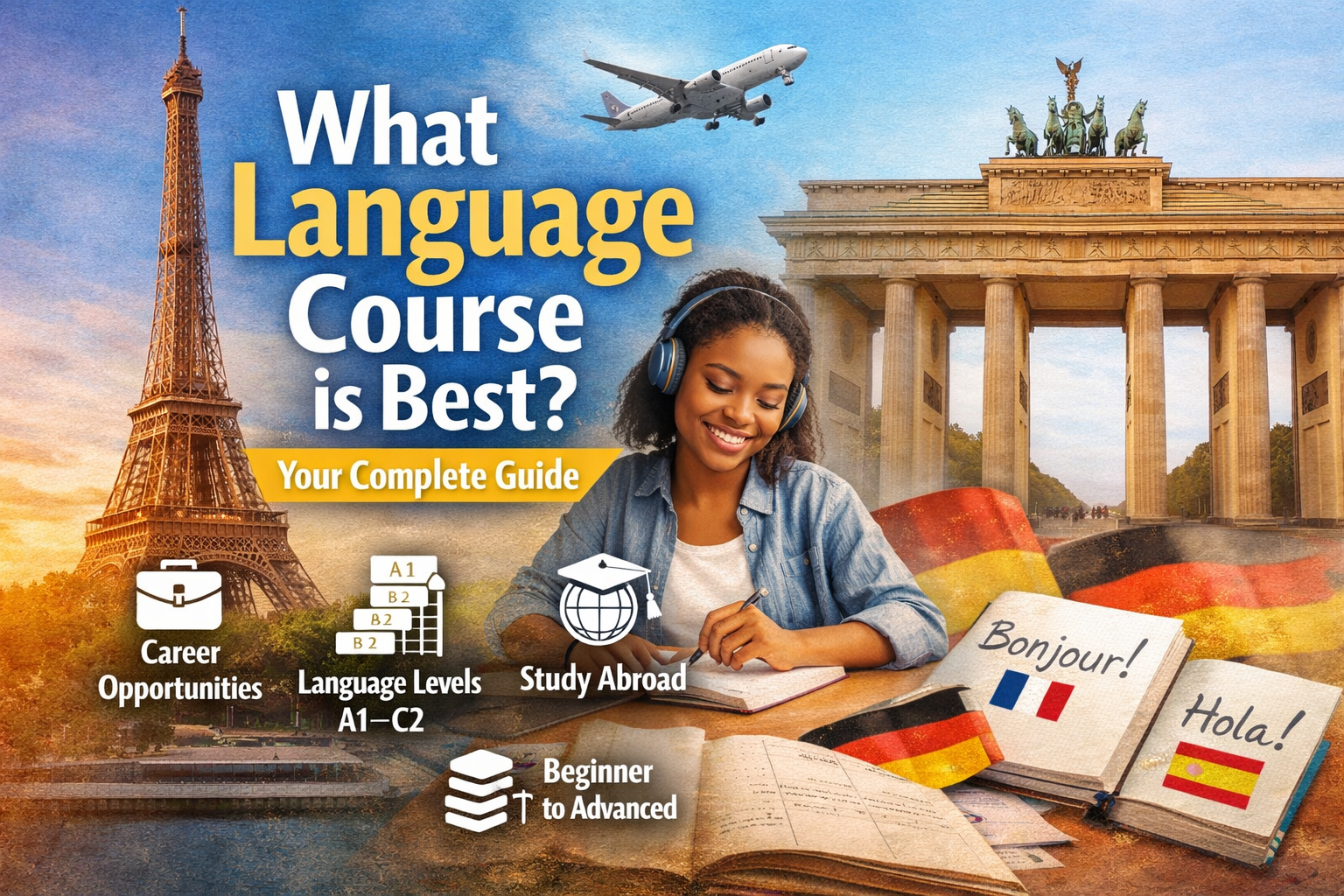
It can be difficult to select the best language course. Many individuals wonder what the greatest language course is because there are so many languages to learn and varying degrees of ability to attain.
In actuality, your objectives, career progress, relocation, education, travel, or personal development, will determine which language course is “best.” We’ll explain everything in detail in this guide so you can choose the best course of action for your future.
Why Choosing the Right Language Course Matters
It takes time, dedication, and consistency to learn a language. Making the incorrect decision might result in dissatisfaction, sluggish development, or squandered effort. However, taking the appropriate language training can increase confidence in social and professional contexts, enhance communication abilities, and open doors to worldwide opportunities.
We at The Multi-Language Place assist students in selecting language classes that complement their career and personal objectives.
1. What Language Course Is Best for Career Growth?
If your main goal is career advancement, the best language course is one that improves your employability and global relevance.
Top Languages for Career Opportunities
French
One of the most important languages for professional advancement is French, particularly in international organizations, Africa, Canada, and Europe. NGOs, international corporations, and diplomacy all make extensive use of it.
German
For jobs in engineering, technology, healthcare, and relocation to Germany, Austria, and Switzerland, German is the best language. Many people study German in order to obtain work permits, study overseas, or relocate professionally.
Spanish
Spoken on several continents, Spanish is extremely useful for international commerce, travel, and trade.
Arabic
Careers in international relations, oil and gas, diplomacy, and religious studies all require proficiency in Arabic.
English
English continues to be the universal language of communication, business, and education. Professionals still find advanced English courses to be very beneficial.
Best career-focused choice: French and German are currently among the most in-demand languages for global mobility and job opportunities.
2. What Language Courses Are Best Overall?
The finest language classes combine real-world practice, disciplined instruction, and a clear progression.
Characteristics of a Good Language Course
-
Clear learning objectives
-
Defined proficiency levels
-
Experienced instructors
-
Practical speaking opportunities
-
Cultural exposure
Popular Language Courses
-
French language courses (A1–C1)
-
German language courses (A1–B2)
-
Spanish beginner to intermediate courses
-
Arabic conversational and academic courses
-
English proficiency and exam preparation
At The Multi-Language Place, learners can choose both online and in-person language courses that fit their schedule and learning pace.
3. What Are Language Levels: A1, A2, B1, B2, C1, and C2?
Most international language courses follow the Common European Framework of Reference for Languages (CEFR).
Beginner Levels
A1 (Beginner)
A2 (Elementary)
-
Communicate in routine tasks
-
Understand frequently used expressions
-
Talk about daily activities
Intermediate Levels
B1 (Intermediate)
-
Handle travel conversations
-
Express opinions and experiences
-
Understand the main points of discussions
B2 (Upper Intermediate)
Advanced Levels
C1 (Advanced)
-
Use language flexibly for academic and professional purposes
-
Understand implicit meanings
-
Speak confidently and clearly
C2 (Proficient / Mastery)
These levels help learners track progress and meet study, work, or relocation requirements.
4. What Are the 7 Stages of Language Learning?
Language learning happens in stages. Understanding these stages helps learners stay motivated.
Stage 1: Pre-Production (Silent Stage)
Listening and absorbing sounds and patterns.
Stage 2: Early Production
Speaking simple words and short phrases.
Stage 3: Speech Emergence
Forming basic sentences and expressing ideas.
Stage 4: Intermediate Fluency
Communicating comfortably in everyday situations.
Stage 5: Advanced Fluency
Understanding complex conversations and media.
Stage 6: Near-Native Competence
Thinking and responding naturally in the language.
Stage 7: Cultural Mastery
Understanding cultural references, humor, and nuance.
5. Which Language Course Is Best for Relocation or Study Abroad?
For people planning to relocate or study abroad, language requirements are often strict.
Choosing the correct course level ensures visa approval, academic success, and smooth integration.
6. Which Language Course Is Best for Beginners?
For beginners, the best language course should:
Beginners may find it easier to learn French and Spanish, but German may need more structured instruction. All of these languages are attainable with the correct teachers.
7. How Long Does It Take to Complete a Language Course?
Time depends on:
-
Your learning goals
-
Practice frequency
-
Immersion level
On average:
-
A1 → 6–8 weeks
-
A2 → 8–10 weeks
-
B1 → 3–4 months
-
B2 → 4–6 months
Consistency matters more than speed.
8. Online vs Physical Language Courses: Which Is Best?
Online courses offer flexibility and convenience.
Physical classes provide structure and in-person interaction.
The best option often combines both.
9. How to Choose the Best Language Course for You
Ask yourself:
-
Why do I want to learn this language?
-
Do I need it for work, travel, or study?
-
How much time can I commit weekly?
-
Do I prefer online or in-person learning?
A professional consultation can help match your goals to the right course.